Yoga Anatomy: The Three Planes of Movement That Make Advanced Poses Possible
Mar 17
/
Amber Helms
If you've been practicing yoga and certain poses still feel like they're on the other side of a wall - deep hip openers, backbends, twists that never quite release - anatomy is usually the answer.
Not flexibility. Not strength, exactly. Anatomy.
Specifically: an understanding of how the body actually moves, and why most yoga practice - as wonderful as it is - only trains one dimension of that movement.
This is yoga anatomy for beginners and experienced practitioners alike. Once you see it, you can't unsee it - and your practice changes.
What Are the Three Planes of Movement?
Your body moves in three planes. Each plane describes a different axis of movement. Most yoga poses live primarily in one plane, with secondary elements from the others.
Understanding which plane you're training - and which you're not - is the most practical thing you can learn about yoga anatomy.
Sagittal Plane
The sagittal plane divides the body into left and right halves. Movement in this plane is forward and backward: flexion and extension.
Most yoga practice happens here.
Key muscles trained: hamstrings, hip flexors, spinal extensors, quadriceps
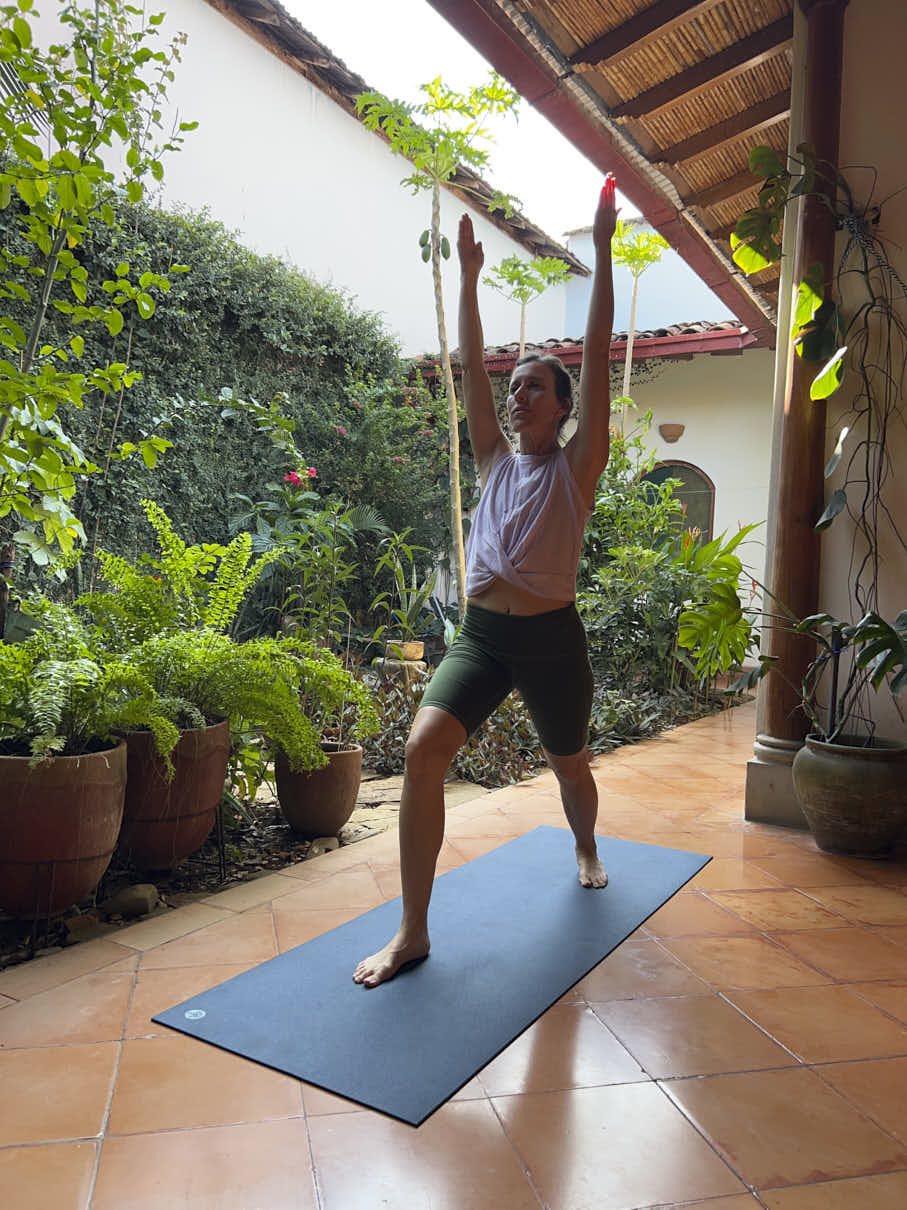
Common sagittal plane poses: Forward Fold, Warrior I, Upward Dog, Seated Forward Fold, Camel Pose
Most yoga practice happens here.
Sun salutations, Warrior I, forward folds, backbends - these are all primarily sagittal movements. You're folding forward, lengthening back, moving through space in one direction.
This is why a dedicated yoga practice builds significant hamstring flexibility and hip flexor length before it touches the muscle groups that live in the other two planes. If your practice has been entirely flow-based, your sagittal plane is probably well-trained. The others, less so. This is particularly relevant for cyclists, whose training locks the body into almost exclusively sagittal movement — if that's you, Yoga for Cyclists Course is built specifically around this imbalance.
This is why a dedicated yoga practice builds significant hamstring flexibility and hip flexor length before it touches the muscle groups that live in the other two planes. If your practice has been entirely flow-based, your sagittal plane is probably well-trained. The others, less so. This is particularly relevant for cyclists, whose training locks the body into almost exclusively sagittal movement — if that's you, Yoga for Cyclists Course is built specifically around this imbalance.
Key muscles trained: hamstrings, hip flexors, spinal extensors, quadriceps
Common sagittal plane poses: Forward Fold, Warrior I, Upward Dog, Seated Forward Fold, Camel Pose
The Frontal Plane
The frontal plane divides the body into front and back halves. Movement here is lateral: side bending, abduction and adduction (moving the limbs away from and toward the midline of the body).
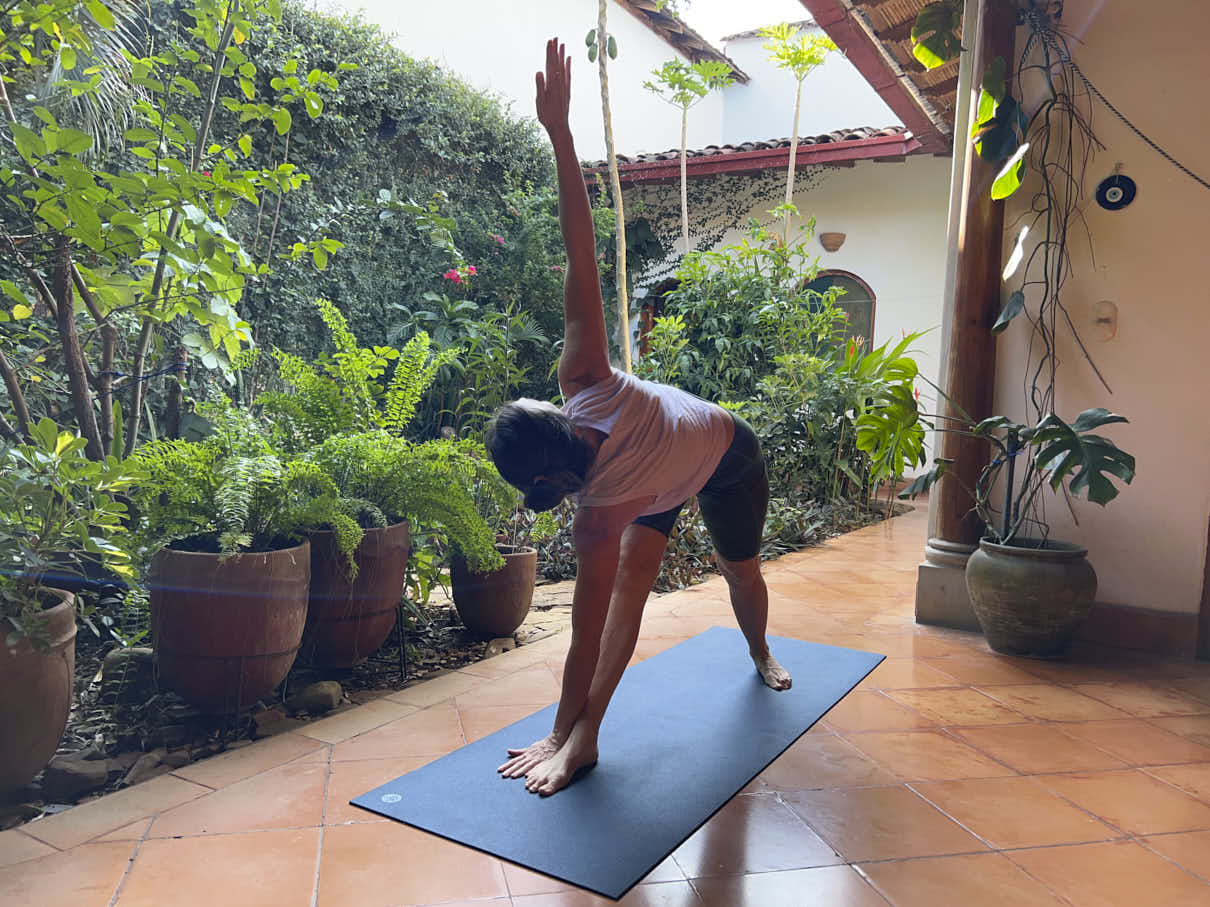
Warrior II and Triangle Pose are the most common frontal plane poses in yoga. Wide-legged forward folds have significant frontal plane components. But in most sequences, this plane is visited briefly and moved through quickly.
The muscles of the lateral hip - the abductors and adductors - are often undertrained in yoga practitioners as a result. This matters for balance poses, hip stability, and arm balances more than most people realize.
Key muscles trained: hip abductors (gluteus medius, TFL), hip adductors, lateral core, obliques
Common frontal plane poses: Warrior II, Triangle Pose, Gate Pose, Wide-Legged Forward Fold, Side Plank
The Transverse Plane
The transverse plane divides the body into top and bottom halves. Movement here is rotational: twisting, turning, spiraling. Tai Chi is one of the best practices for training all three planes simultaneously - its slow, deliberate movements develop rotational strength, lateral stability, and sagittal balance in a single flowing sequence. Our Essence of Tai Chi course is a good complement to any yoga practice for this reason.
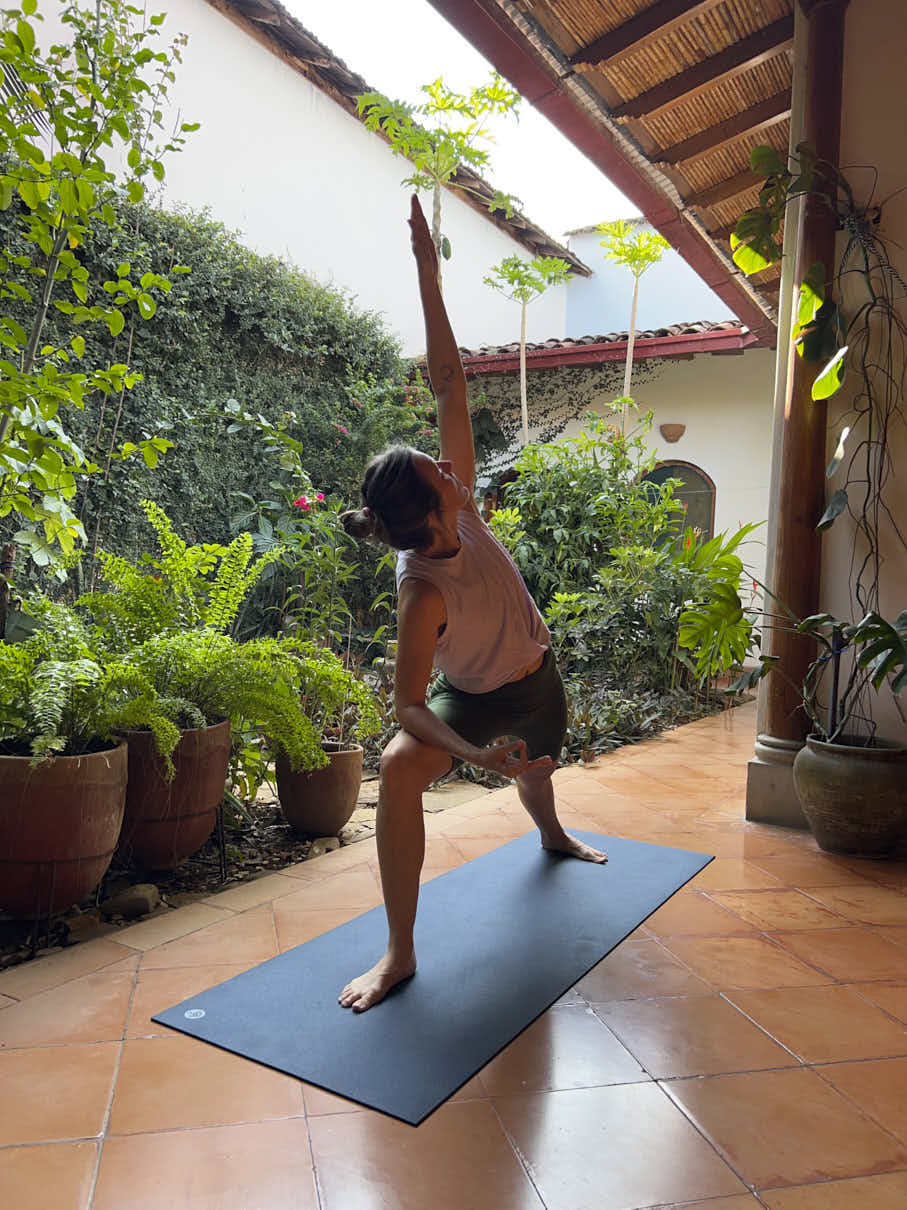
Revolved Triangle, seated twists, and binding poses work the transverse plane directly. But rotation is also embedded in movements that don't look like twists: the external rotation of the hip in Warrior II, the internal rotation that Pigeon Pose demands, the scapular rotation that underlies every Chaturanga.
Rotational strength and control is often the hidden variable in poses that "almost work." The shape looks right, but the rotational coordination and the deep stabilizers that control rotation aren't there yet.
Key muscles trained: deep hip rotators (piriformis, obturators), obliques, thoracic rotators, rotator cuff
Common transverse plane poses: Revolved Triangle, Half Lord of the Fishes, Revolved Chair, Eagle Pose, Binding poses
Why This Matters for Your Practice
Here's the practical implication: when a pose isn't working, it's usually not the fault of the plane you're training. It's the plane you're
not.
Take Pigeon Pose as a clear example - one of the most important poses for sacral chakra work.
Most people assume Pigeon isn't working because their hips are too tight. But the depth of Pigeon depends far more on transverse plane rotation - the external rotation of the hip - than on sagittal plane flexibility. Practitioners who have trained forward folds for years still struggle with Pigeon because the rotational plane hasn't been specifically prepared.
The same pattern shows up across chakra-related poses:
-Heart chakra backbends - Camel and Wheel feel blocked not because the spine won't extend (sagittal) but because the chest and shoulders lack the frontal and transverse plane mobility to open fully
-Solar plexus twists - Twisting poses that target the core and digestion require transverse plane control, not just the ability to reach further
-Root chakra standing poses - Warrior sequences feel unstable when the lateral hip stabilizers (frontal plane) haven't been trained
alongside the sagittal plane strength
This is why chakra-focused yoga practice benefits enormously from understanding the planes. It explains why certain poses that are supposed to open certain centers don't seem to land - and what to do about it.
How to Train All Three Planes: Practical Additions
You don't need to overhaul your practice. You need to add intentional attention to the planes your current sequence isn't reaching.
For the frontal plane
Lateral leg raises (lying): Lie on your side, leg straight, and lift the top leg 12–18 inches. Control both the up and down. This is the lateral hip abductor work that standing balance poses require. 15 slow reps per side, 2–3 sets.
Sumo squats: Wide stance, toes turned out significantly. The descent loads the hip adductors through range. These are neglected in almost every yoga-centric training program.
Sumo squats: Wide stance, toes turned out significantly. The descent loads the hip adductors through range. These are neglected in almost every yoga-centric training program.
In standing practice: Slow down transitions in and out of lateral poses. The moment you rush past Warrior II is the moment you stop training the frontal plane and start relying on momentum.
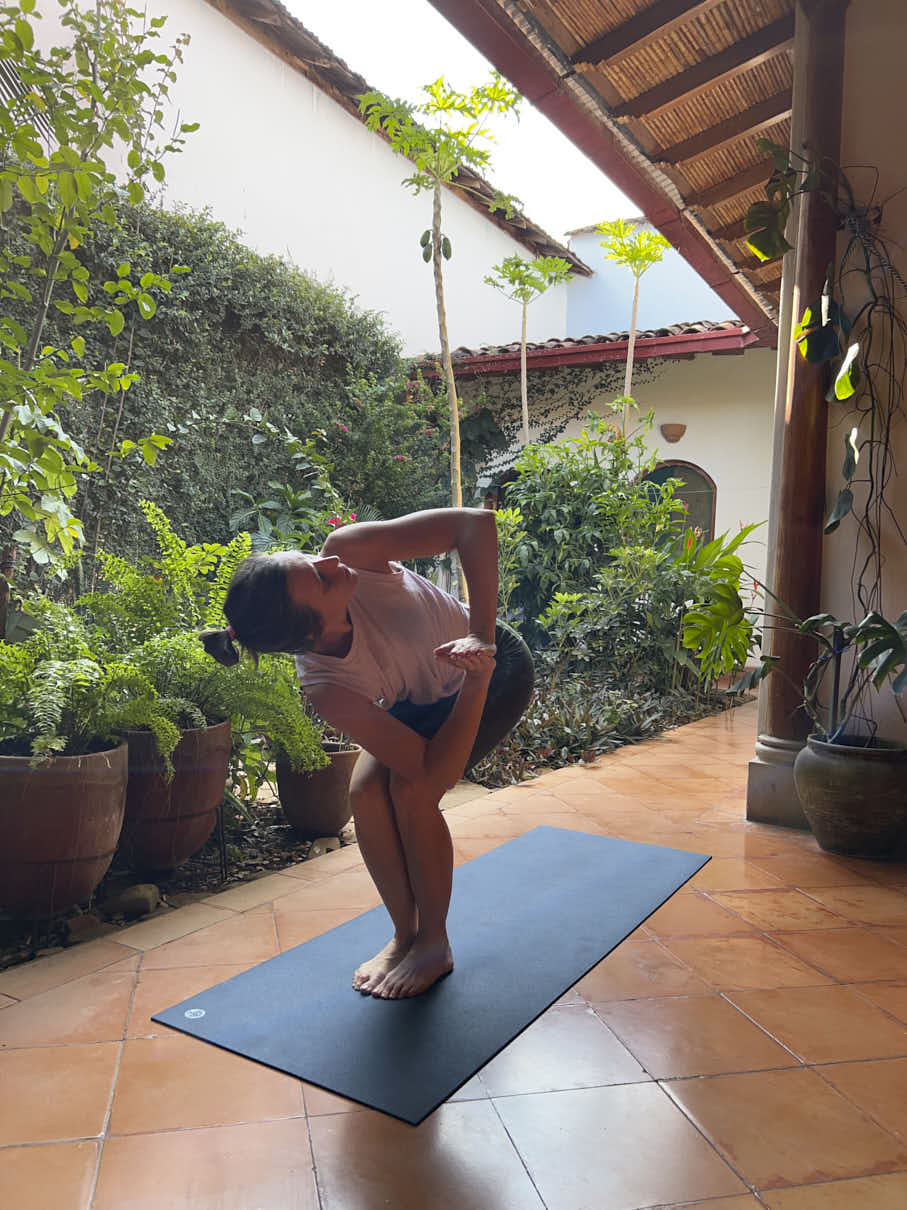
For the transverse plane
90/90 hip stretches: Sit with both legs at 90-degree angles to the body - one leg in front hip external rotation, one in back hip internal rotation. Switch sides. This is the most direct way to build range in both directions.
Standing figure-4 (controlled rotation): One leg crossed at the ankle above the knee of the standing leg. Slowly hinge forward from the hips. The deep hip rotators of the raised leg get specific attention that pigeon pose, in its passive form, doesn't always deliver.
Controlled twists: In any seated or standing twist, the question isn't how far you can go - it's whether you can maintain spinal length and control the rotation through full range. If you're muscling into the twist, you're not training rotation; you're compressing.
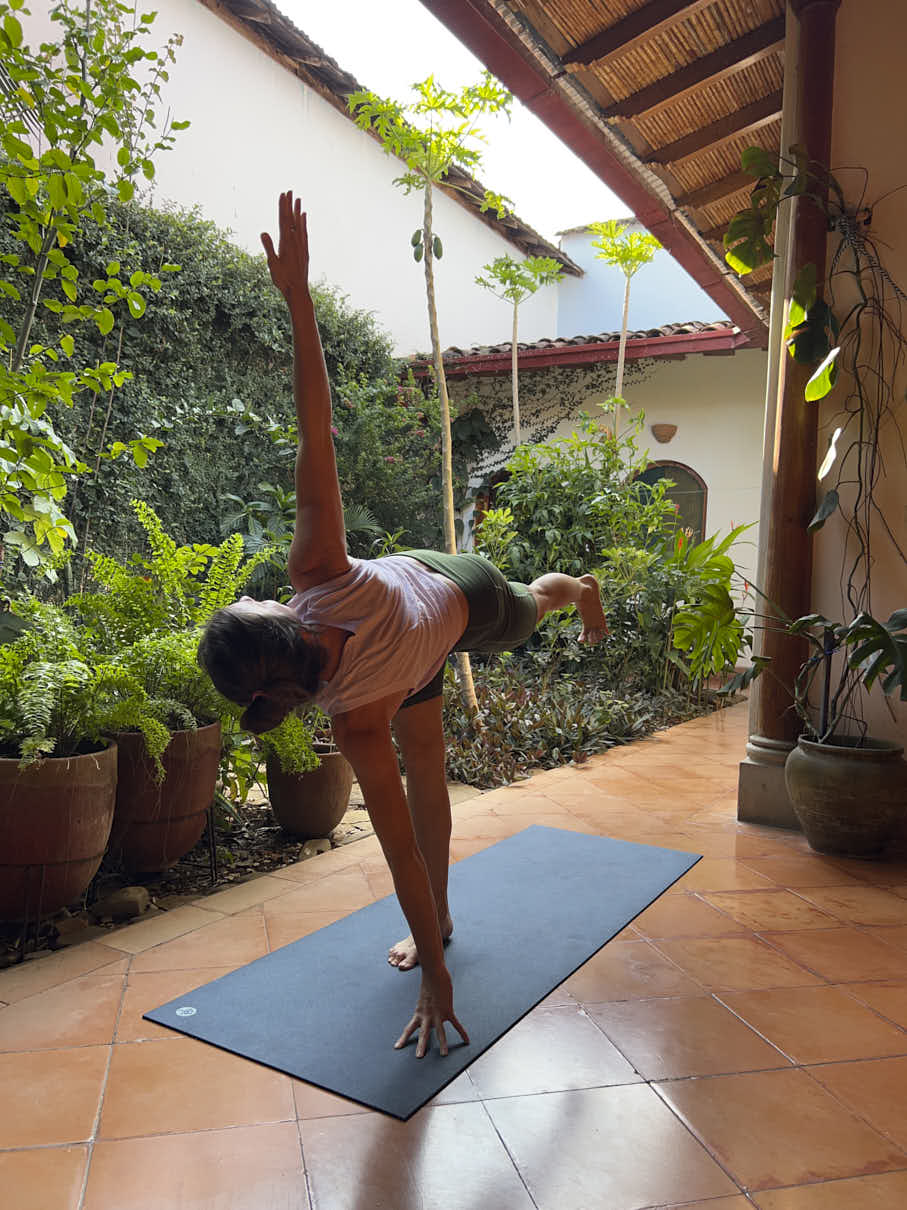
For integrated multi-plane movement
The most sophisticated movements - arm balances, deep hip openers, advanced inversions - require all three planes to coordinate simultaneously. This is what anatomy-based training specifically addresses.
Rather than more of what you're already doing, train the specific muscle groups in their specific planes, then bring them together in the target pose. This is fundamentally different from hoping that enough yoga will eventually unlock the movement.
Why Most Yoga Classes Don't Teach This
The three-planes framework isn't something you encounter in most yoga classes or tutorials. It's not that teachers don't know it - many do. It's that standard class formats aren't built around it.
A vinyasa class is built around a flow. The sequence has a rhythm and an arc. There isn't space to pause on the lateral hip abductors, to isolate transverse rotation, to do the specific preparation work that a particular advanced pose actually requires.
This is why anatomy-focused teaching is different - and why practitioners who receive it tend to make progress on stuck poses after months or years of not getting there.
When you understand what's actually happening under the surface, the pose stops being a mystery. You know which muscle groups need work. You know what plane is missing. And you train that specifically.
The Chakras and the Three Planes: Why This Matters for Energy Work
Here's where yoga anatomy connects to something deeper than physical poses.
Each chakra corresponds to a specific region of the body - and the yoga poses that balance each chakra work primarily in a specific plane of movement. Understanding the relationship between the two explains why certain poses affect certain chakras, and why a practice that only trains one plane will always feel incomplete.
-Root chakra (base of spine, hips, legs): Sagittal plane grounding poses - Mountain Pose, Forward Fold, Warrior I. These build the downward, rooted energy that stabilizes the foundation.
-Sacral chakra (lower abdomen, hips):
Frontal and transverse plane hip openers, lateral movement, rotation. The sacral chakra holds creativity and emotion, and the poses that reach it require the planes most yoga classes skip.
Frontal and transverse plane hip openers, lateral movement, rotation. The sacral chakra holds creativity and emotion, and the poses that reach it require the planes most yoga classes skip.
-Solar plexus (core, abdomen): All three planes in coordination — core strength, twist, lateral stability. Will and confidence live here, and they're built through full-plane engagement.
-Heart chakra (chest, upper back): Sagittal backbends open the front body; transverse twists release the upper back. Both are needed to fully open this center.
-Throat, third eye, crown: Increasingly subtle - but the physical foundation beneath them depends on whether the lower centers have been prepared through all three planes of movement.
This is why a chakra balancing practice that only uses forward folds and seated meditation often feels incomplete. The energetic work needs the physical work - across all three planes - to have a stable body to move through.
Chakra Balancing: Anatomy-Informed Practice
Amber Helms built Chakra Balancing 101 around exactly this understanding: that chakra work is most effective when it's grounded in the body - in specific poses, breathwork, and movement that reaches each energy center physically and energetically.
The course moves through all seven chakras systematically, starting at the root. Each center gets its own section: what it governs, how to recognize imbalance, and the specific yoga poses, breathwork, affirmations, and meditation practices that restore balance.
This isn't surface-level chakra content. It's a complete practice - built on the principle that when you understand how your body works, the energy work stops being abstract and starts being real.
$99, one-time payment, lifetime access.
$99 · One-time · Lifetime access · At your own pace
Real practices. Expert teachers. Feel like yourself again.
Yoga, chakra healing, reiki, astrology, and more — one-time payment, lifetime access.
Yoga, chakra healing, reiki, astrology, and more — one-time payment, lifetime access.
Courses by category
Top courses
Blog / Learn
About & Legal
Copyright © 2026
Created with